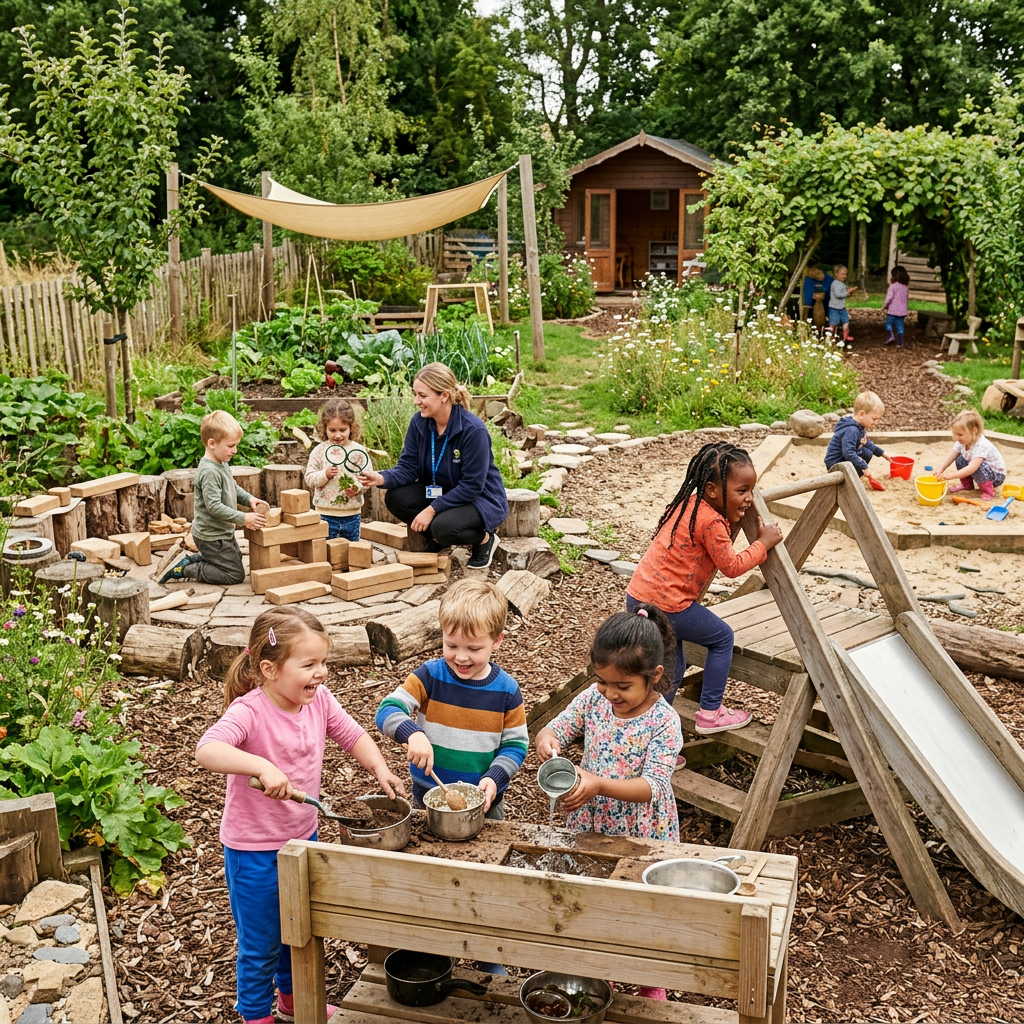
Theories and Foundations for ECE Classrooms
Applying Gesell’s Maturation Theory to Outdoor Learning Environments
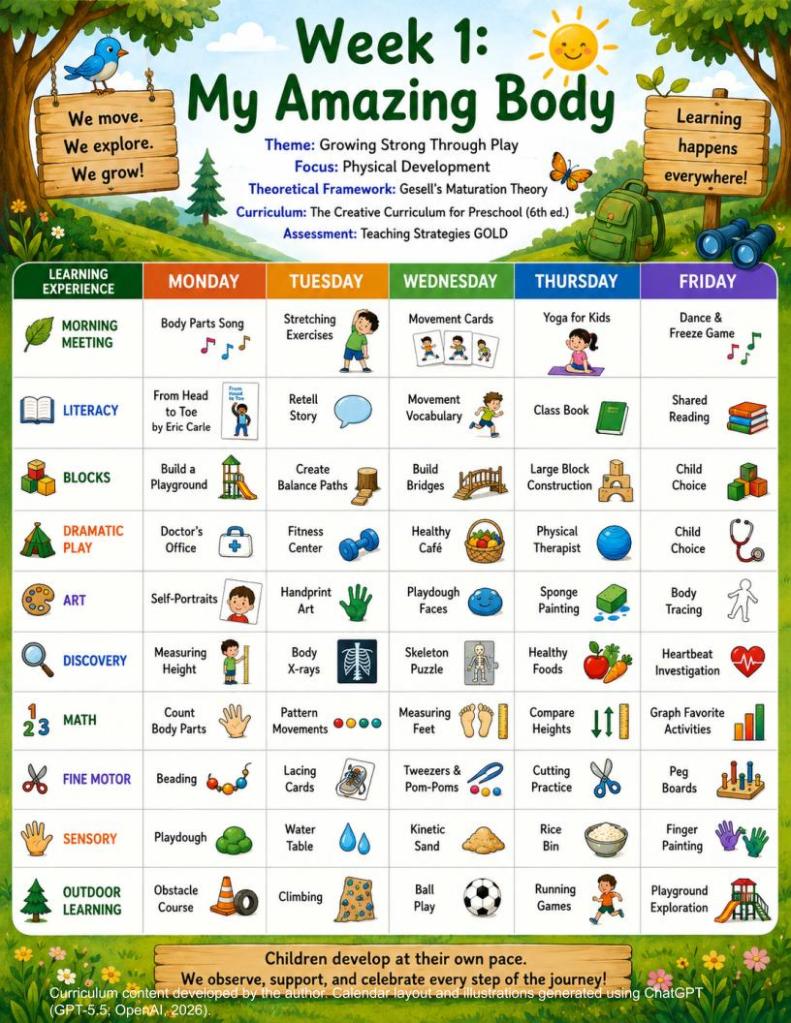
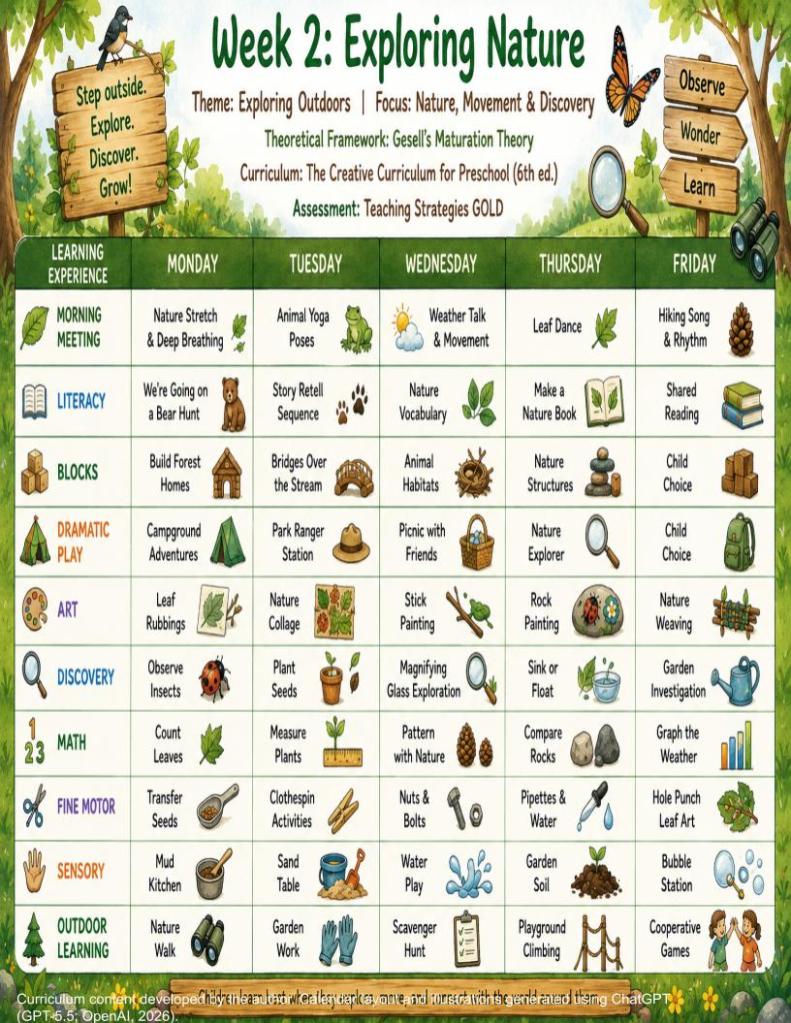
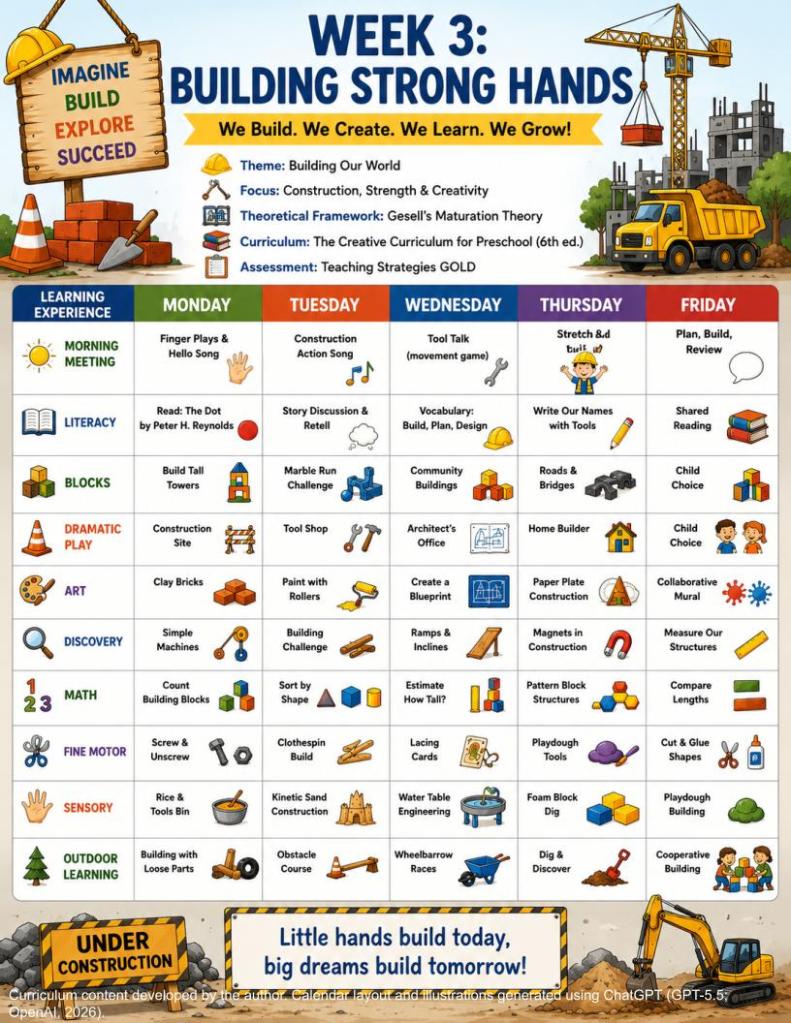
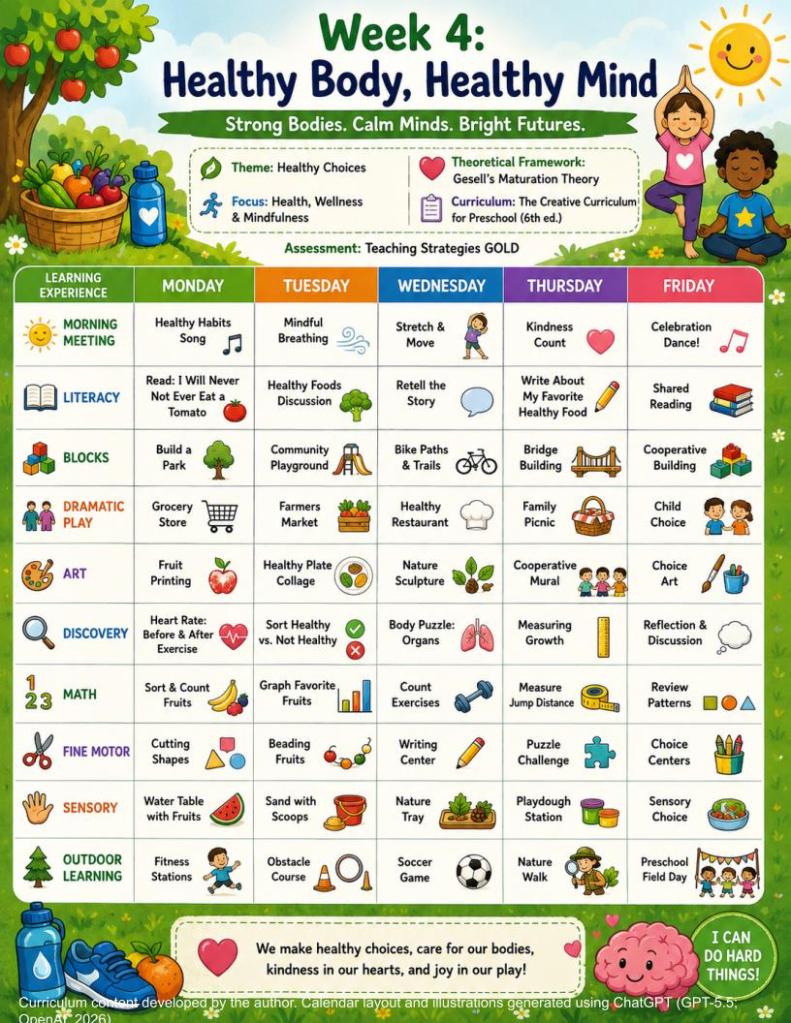
Early childhood curriculum should be intentionally designed to support children’s natural patterns of growth while recognizing that development occurs at an individual pace. Arnold Gesell’s maturation theory provides a framework for understanding how biological readiness influences children’s acquisition of physical, cognitive, language, and social-emotional skills (Gesell, 1940). Although contemporary researchers recognize that development is influenced by both biology and environmental experiences, Gesell’s emphasis on developmental readiness continues to inform developmentally appropriate educational practice (Berk, 2023). Rather than emphasizing accelerated academic instruction, Gesell believed children benefit most from experiences that allow them to practice emerging skills through exploration, movement, and play. The accompanying curriculum calendars reflect these principles by providing a month of carefully planned, hands-on learning experiences that promote physical development while integrating learning across developmental domains.
 Rachel Dwaine-M.Ed.